


Would you believe us if we told you the secret to happy, healthy hair is as simple as knowing your hair type and texture? Well, not the whole secret – but it’s definitely the best place to start! Whether you’re rocking ringlets or super straight locks, knowledge is power. And every day has the potential to be a good hair day when you know what you're working with.
There’s a lot that goes into figuring out your hair texture and its tendencies, though. So, lucky for you, we’ve created this go-to guide. For everything you need to know to determine your hair type – and get the locks of your dreams – read on.
What Does “Hair Type” Mean?
We all have a skin type – and we all have a hair type as well. Most commonly referred to as hair curl pattern or formation, your hair type is determined by the shape of your strands, curl pattern (or lack of) and thickness. Like your pores, hair follicles are the holes from which your hair grows. And the more oval-shaped the follicle is, the curlier the locks you'll have.
Like combination skin, your hair may not even fit perfectly into one category. And that's totally okay! It's very common to have more than one hair texture, especially when wearing your strands au naturel.

How Do I Identify My Hair Type?
So, what’s your type? That’s what we’re here to find out! The easiest way to classify your hair is after a fresh wash. Look closely at the shape of an individual hair strand, air-dried and free from any product. This is the time to get the best sense of your hair texture by looking at the tightness and definition of your curls, coils and waves. Or lack thereof.
For instance, if your hair has a slight curve but isn't wholly spiralled, you most likely have type 2 hair, or if you have tightly coiled hair but can see slightly defined curls, you have type B hair. Confused? Keep reading and it will soon become clear.
The Different Hair Types
When you think of different hair types, the first thought that pops into your head is probably thin or thick, straight or curly. The Andre Walker hair typing identifies four main hair types and 12 distinct subtypes using a combination of numbers and letters. The hair typing system is broken down as follows:
The numbers (1-4) describe the major hair category based on its shape:
- Straight
- Wavy
- Curly
- Coily/Kinky
The letters (A, B, C) characterize the hair size or tightness of the wave, curl, or coil pattern:
- A: Widest pattern (loose waves or curls)
- B: Medium pattern
- C: Tightest or smallest pattern (tight coils)
Together, the number and letter (like 2B or 4A) pinpoint your exact hair type. Now let’s look at the different hair types in detail.
Type 1 Hair: Straight
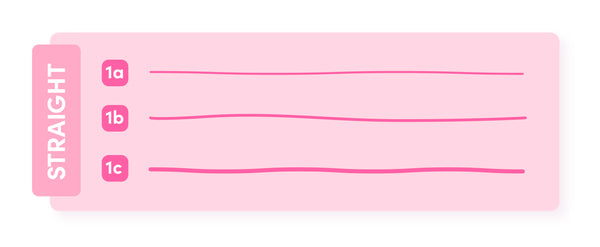
If you have type 1 hair, you have naturally straight locks, which are often on the shinier side (congrats). Because of the lack of curls, natural oil can flow easily from the scalp, which helps your hair get the nutrients it needs.
- Type 1A is 100% pin-straight with not one curl or wave in sight. People with this fine hair type may have difficulty holding a curl. It’s the rarest hair type.
- Type 1B is just as straight but has more body-ody-ody! Because of its medium texture, it can hold curls more easily.
- Type 1C is typically thick and coarse. This makes it more prone to frizz (depending on the weather and your environment), but it’s still curl-resistant.
Type 2 Hair: Wavy
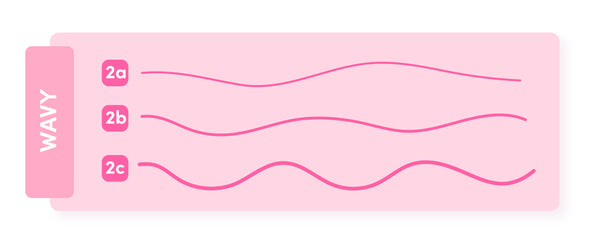
Type 2 is a middle ground between curly and straight. This hair type is classified as wavy and has a light curl pattern with an S-shape.
- Type 2A is the dream – a solid beach wave, curling perfectly at the tips.
- Type 2B is the happy medium between 1 and 3. Not quite curly and not quite straight. In this type, the hair is mostly straight at the roots, falling into more defined S-shaped lengths.
- Type 2C has a wavy definition that starts at the roots. This hair texture forms a tighter S-shape and is usually thick or coarse, making the 2C crew prone to frizz.
Type 3 Hair: Curly
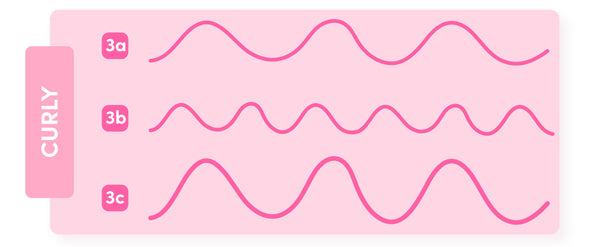
Type 3 is curly hair with a wide range of curl patterns, from loose waves to tight corkscrews. This hair type needs more hydration to keep the curls looking defined and gorgeous.
- Type 3A hair has loose, bouncy curls with a crisp Shirley Temple spiral from root to tip. Whether you go with or without product, this hair pattern holds shape well.
- Type 3B leans on the coarser side. If you have this curl pattern, you’re likely to experience more dryness than your 3A pals. Shrinkage is also typical, which makes hair look shorter than it actually is. How? As your curls dry, they go from a long, stretched-out form to a tight, compact coil resembling a corkscrew.
- Type 3C curls are densely packed and serve volume for days. Often more brittle than other Type 3 mops, this hair type needs a solid haircare regimen with a quality deep conditioner or strengthening hair mask.
Type 4 Hair: Coily
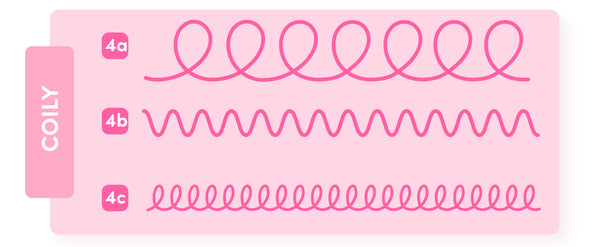
Type 4 is usually classified as kinky hair. It’s characterised by compact coils that are typically tighter than Type 3 curls – but not as defined.
-
Type 4A hair features an S-shape with delicate and visibly springy coils. This kind of hair requires an immense amount of moisturisation and TLC. Nourishing deep conditioning will be your best friend. (Pro-tip: Try our OG Like A Virgin Super Nourishing Hair Masque!)
-
Type 4B is often referred to as kinky. This hair type doesn't have a distinct curl or coil, but rather a zigzag pattern with the same circumference as a pencil.
-
Type 4C, the final hair type, is almost twinning with 4B, but with even tighter coils. 4C does best with heavier, creamier products like our Super Hydrating Cream Conditioner.
Hair Porosity
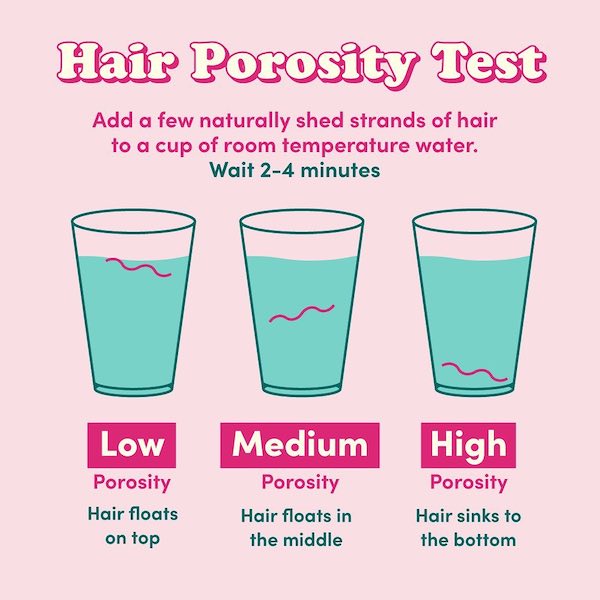
Hair porosity is your hair's ability to absorb and retain moisture, a factor determined by the cuticle layer (the outer layer of the hair shaft). The different porosity levels are Low, Medium, or High. Understanding your hair’s porosity is essential for choosing the right products for your hair.
How to Determine Your Hair’s Porosity
To check your porosity, shampoo your hair, let it dry completely (without any product) and gently drop a few clean strands into a glass of water.
- Low Porosity: The hair strand floats. The cuticle is tight, making moisture hard to absorb (long drying time, prone to product buildup).
- Medium Porosity: The hair strand sinks slowly. This is the easiest type to manage, retaining moisture well and holding styles effortlessly.
- High Porosity: The hair strand sinks immediately. The cuticle is open, meaning hair absorbs moisture quickly but loses it just as fast (prone to dryness and breakage).
Other factors, like heat damage and chemical treatment, can negatively impact your porosity, often making it higher.

Scalp Hydration
Another thing to remember: If your scalp isn’t healthy, your hair won’t be either. Along with figuring out your hair type, you also need to determine what kind of scalp you have. The second day post-wash gives you the best idea!
Scalp Categories:
- Dry Scalp: Experiences itchiness and tends to flake.
- Oily Scalp: Can’t skip wash days without noticing greasy strands or oiliness within the first two days.
- Balanced Scalp (Normal): Easy to manage, even if you haven’t washed it in two days.

Our Product Recommendations for your Scalp and Hair Type
Now that you know what type of scalp and hair you have, choosing the right shampoo, conditioner and hair care treatment is a piece of cake!
-
For Frizz & Hydration: Our Super Hydrating Shampoo is a rich 7-in-1 nourishing formula that hydrates hair, restores shine and combats environmental stressors.
-
For Quenching Thirsty Strands: Follow with our Super Hydrating Cream Conditioner, which is packed with good-for-you ingredients like pineapple, coconut and avocado oil. Your strands will be noticeably softer and healthier-looking after just one use.
-
For Treating Dry Scalp: For an added boost, exfoliate dead skin and rid the scalp of product buildup with our Sweet Repair Scalp Massager while encouraging fuller hair with an Hair Density Serum.
Final Thoughts
You must understand your hair type to give your mane the most effective treatment for the best possible results. No matter if your hair is thin, thick, short, curly, oily, coarse, or straight, you deserve the best. Every hair type requires special care and knowing what yours is will help you kiss lousy hair days goodbye for good.
Looking for more time-saving hair hacks? Check out our blog!
Edited By: Pip Jarvis and Iris


